
host-post-03-pillar-branded.md

The right way to judge sweat Decks’s complete outdoor sauna guide is by how it will feel, fit, and hold up after the first month. Heat performance, electrical planning, materials, maintenance, and actual user habits matter more than showroom language.
Cover image suggestion: A landscape architect’s sketchbook open on a table next to plant specs, a tape measure, and a coffee mug, with a partially completed backyard plan visible.
Meta description: After interviewing seven residential landscape designers across four climate zones, the same frustrations kept surfacing. Here is what they all wish their clients understood before the first site visit.
Dan Kowalski, a design-build firm owner in Westchester County, told me a story over the phone that stuck. A couple in Dobbs Ferry came to him last spring with a $90,000 budget for a full backyard overhaul: patio, plantings, a barrel sauna, outdoor shower, the works. Except $90,000 wasn’t really their budget. It was the number they gave him to “keep things tight.” Their actual ceiling was closer to $140,000. Dan designed to $90K. They hated it. Two rounds of revisions later, $6,200 in design fees burned, they finally admitted the real number. “I could have given them that backyard in the first schematic,” Dan said. “Instead we wasted two months designing something nobody wanted.”
That exchange captures the core of what I heard over six weeks of conversations with seven residential landscape architects and design-build owners in Seattle, Austin, the Hudson Valley, and Colorado’s Front Range. The frustrations were remarkably consistent. None of them were technical. All of them were the kind of misunderstanding that, if cleared up in meeting one, would save 15 to 30 percent on most projects.
Here’s what they want you to know.
Tell Your Designer the Real Budget
This was the single most repeated complaint. Designers said clients understate budget by 30 to 50 percent in the first conversation, then get frustrated when the schematic comes back at their actual number.
The logic behind lowballing is defensive. Homeowners assume contractors will spend whatever figure they hear, so they anchor low. The result: the schematic doesn’t match what the client actually wants, two redesign rounds get billed, and the project either rebudgets or shrinks painfully.
The fix is boring and simple. Name the high end of what you’d consider spending if you fell in love with the design. The designer works backward from there. If the result costs more than you want, you descope with full information rather than designing blind.
Drainage Is the Whole Project (and You Won’t See It in Photos)
Three of the seven designers said grading and drainage is where projects either succeed or quietly rot from underneath.
Dan (the Westchester guy) put it plainly: clients walk a property and see plants and patios. He walks the same property and sees water. Where does it flow during a three-inch rain? Where does the existing grade pool? What’s the high point of the lot relative to the foundation? What’s the soil composition?
Get the drainage wrong and your hardscape heaves in five winters, your plantings drown, and your wellness structures sit on a pad fighting hydrostatic pressure year-round.
The budget implication: 8 to 15 percent of a serious backyard project should be soft costs and drainage work that’s invisible in the final photos. Clients hate paying for things they can’t see. Designers can’t do their jobs without them. This is the tension that never fully resolves.
Why “Phase It” Usually Falls Apart
Every designer has been asked to phase a project. Build the patio this year, plantings next, sauna or hot tub the year after. They’ve all watched these projects underperform.
The reason is simple, almost mechanical. Mature backyards run on interconnected systems. The irrigation main runs under the patio. The conduit for the future sauna runs under the same patio. The drainage swale gets buried by the planting bed if you don’t coordinate. Build the patio without trenching for the later phases and you’re either jackhammering it out in year three or living with surface-routed conduit that looks amateur.
Phasing works when the designer plans the entire project up front, drops conduit, drainage, and structural pads during phase one, then sequences the visible build over multiple years. Phasing collapses when the conversation is “let’s just do the patio for now.”
If you’re going to phase, pay for the full master plan first. The drawing costs run 4 to 8 percent of total project value, and they pay for themselves the moment phase two begins.
See also: Technology in Workplace Analytics
Saunas, Cold Plunges, and the Problem of Bolted-On Wellness
This came up unprompted in five of seven interviews, which surprised me. The designers said the explosive growth of backyard saunas, cold plunges, and outdoor showers has created a wave of retrofit projects that read as afterthoughts.
The structures themselves are often well built. The siting is the problem. A sauna placed wherever the contractor’s electrician could most easily run a 240V line, with no thought given to views, privacy, or the path from the back door, will get used maybe a quarter as often as one placed with intention.
A designer in Bend, Oregon walked me through her checklist for sauna placement. Paraphrased:
- Sightline from the kitchen window if the household plans to use it daily.
- 18 to 25 feet from the back door so the transition doesn’t require shoes.
- Privacy screen on the side facing neighbors, planted or built.
- Pad graded slightly away from the structure, not flush.
- 240V run on a separate circuit from landscape lighting.
- Cold plunge or outdoor shower within 8 feet if contrast therapy is the goal.
She said most of the saunas she’s been asked to retroactively integrate into existing backyards violate three or four of those rules. The owners stop using them. They blame the sauna. The sauna’s fine. The siting was wrong.
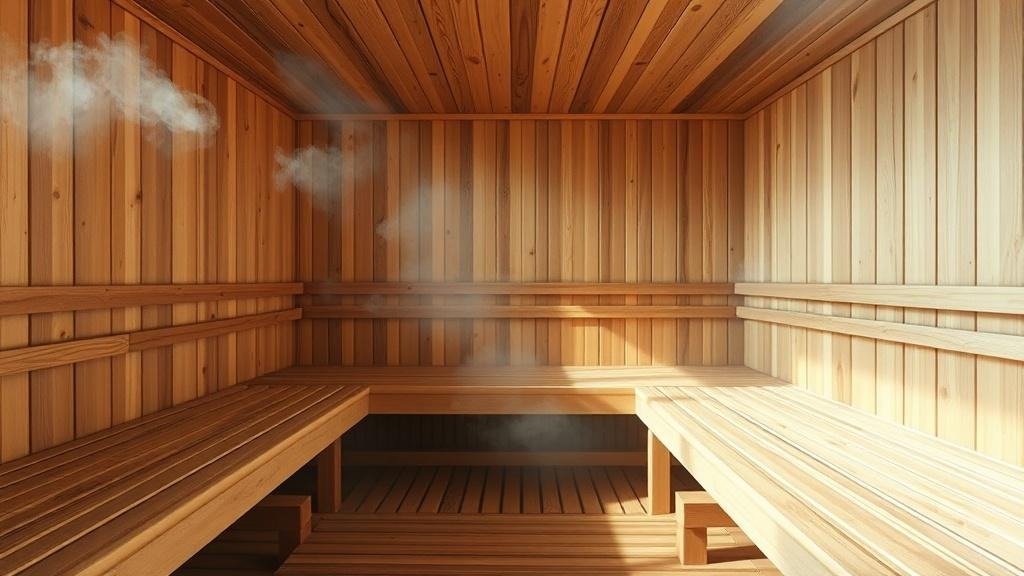
Resources like Sweat Decks’s complete outdoor sauna guide walk through this siting math in detail. It’s the kind of thing serious designers wish clients would read before the first design meeting, not after the contractor has already poured the slab.
Plant Death Is a Line Item, Not a Surprise
A designer in Asheville told me she includes a line item in every proposal for plant replacement in years one and two. Clients sometimes push back. The reality is that residential planting design uses species at the edge of their hardiness zones, in soil disturbed by construction, in microclimates that haven’t been observed through a full year of seasons.
Eight to 15 percent mortality in year one is normal in any serious design. The designer who tells you nothing will die is either using the safest possible palette (which produces a generic result) or being optimistic. Build the replacement budget in. It’s cheaper than redesigning an entire bed in year three because half the plants are dead and the other half are leggy.
Here’s my genuinely opinionated take on this: the obsession with “everything must survive” is the biggest aesthetic trap in residential landscaping. The best gardens are the ones designed with room for some loss, because that’s what allows designers to take chances on the plants that actually make a yard feel specific to its place.
You’re Underspending on Lighting by Half
Five of seven designers flagged lighting as the most consistently underbudgeted line. A proper residential landscape lighting plan in a serious backyard runs 6 to 12 percent of project value. Clients tend to want to spend 2 to 3 percent.
The thinking is defensive again. People assume lighting is something they can add later with a trip to Home Depot. The result: path lights that get clipped by the mower, hot spots from undimmed fixtures, color temperatures fighting each other across the yard like a strip mall at night.
A proper plan uses three or four layers (path, accent, structure wash, moonlight) with a single color temperature spec across all fixtures, a transformer sized for 130 percent of current load to allow expansion, and runs buried with the rest of the conduit during hardscape. The cost difference between doing lighting right and doing it cheap is roughly the price of one mid-size tree. The visual impact difference is enormous.
The 11-Month Photo Is the Real Test
Every designer made some version of this point. A new backyard looks great in the first-month beauty shots. The real test is year two or three, when plants have settled, hardscape has weathered, and the structures have survived a freeze-thaw cycle and a wet summer.
Ask your designer for photos of projects at the 18 to 36 month mark. If they can’t produce them, that’s a flag. If the projects look better at 36 months than at 6, you’re working with someone who understands plant maturation and material weathering. If they look worse, you’re not. It’s a brutally simple filter and almost nobody applies it.
The Gap That Costs You Money
The designers I talked to weren’t frustrated with clients personally. They were frustrated by the structural mismatch between what residential design actually requires (a year of observation, an honest budget conversation, drainage as the foundation of everything, integrated wellness siting) and what the market expects (a Pinterest board and a contractor who can start next month).
Closing that gap saves money, raises quality, and produces backyards that still look good in year ten. The work of closing it falls mostly on the homeowner, because the designer simply cannot get there without your full participation.